Fish Audio in 2026: Voice Cloning Is Easy. Choosing a Production Voice Stack Is Harder.
Fish Audio combines creator-friendly voice generation with APIs, expressive control and open-weight deployment, but the real decision is where synthetic voice belongs in your workflow.
By WhatAI Editorial ·
Fish Audio is easy to underestimate if you first encounter it as a browser-based AI voice generator.
At the surface, the workflow looks familiar. Paste text, choose a voice, generate speech. Clone a voice from a short recording and reuse it. Browse a large voice library. Export audio for a video, podcast or story.
That is only one layer of the product in 2026.
Fish Audio now sits across two overlapping markets. The first is creator voice production: narration, cloning, character voices and multilingual content. The second is speech infrastructure: APIs, streaming, speech-to-text, open-weight models and enterprise deployment.
That combination is what makes the tool worth evaluating.
The strongest edge is control close to the script
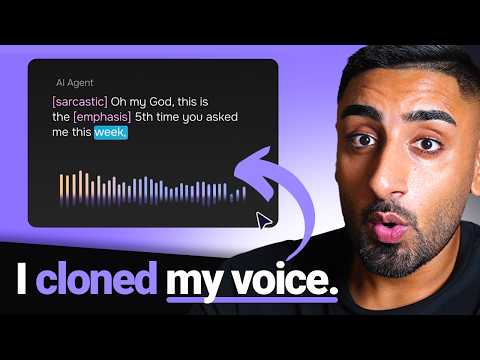
Fish Audio's S2 generation approach makes expressive direction unusually accessible. Instead of choosing one global emotion and hoping it survives a long passage, creators can place natural-language tags directly into the script.
A phrase can be whispered. A sentence can carry hesitation. A laugh, sigh or pause can be positioned where it belongs in the performance.
This sounds small until you compare it with traditional TTS workflows. In many systems, delivery control lives in sliders, separate style settings or post-production. Fish Audio moves part of that direction into the text itself.
The result is not automatic acting quality. It is faster iteration.
The correct workflow is still to generate a plain baseline first. If the voice already delivers the passage naturally, extra tags add complexity without value. Add direction only where the performance actually needs it.
Voice cloning changes the production equation
Fish Audio currently promotes instant cloning from a very short reference sample. In practice, the important point is not whether a voice can technically be cloned from around ten seconds of clean speech. The important point is that the barrier to creating a reusable synthetic speaker has become extremely low.
For creators, that can remove repetitive recording work. A YouTuber can clone their own voice and generate corrections, alternate takes, translated narration or entire scripts. A business can create a controlled brand voice. A game or animation team can prototype character dialogue before committing to final voice talent.
The same capability creates obvious risk.
Technical access is not permission. If you can upload a recording of another person and produce a convincing synthetic version, you still need the rights, consent and disclosures required for that use. Fish Audio's own voice-cloning guidance makes responsibility for those rights the user's problem.
That distinction belongs in the buying decision, not in a footnote.
A good voice stack should make legitimate production easier without normalizing impersonation.
Short demos are not the real test
AI voice products are often judged from ten seconds of impressive audio. That is a weak evaluation method.
The real test is five minutes.
Long-form speech exposes problems that short samples hide: repeated cadence, energy drift, odd breaths, pronunciation inconsistency, strange emphasis and a voice identity that subtly changes over time.
If your use case is a podcast, audiobook, course, documentary or long YouTube narration, evaluate Fish Audio using the exact length and writing style you plan to publish.
Feed it names. Numbers. Acronyms. Parentheses. Mixed-language phrases. Long technical sentences. Emotional transitions. Quiet passages. Fast passages.
Listen for what breaks.
That is more useful than asking whether Fish Audio is the most realistic voice generator in a generic comparison.
Multilingual cloning is more than translation
Cross-lingual generation is one of the more interesting reasons to shortlist Fish Audio.
A cloned voice can be used across languages rather than requiring a separate identity for every localization. For creators and brands, this potentially preserves recognizable speaker identity across markets.
But identity and language quality are different problems.
A system can preserve the timbre of a speaker while still producing awkward pronunciation or rhythm in a target language. That is why multilingual evaluation needs a fluent human listener. The person reviewing the output should understand not only whether the words are technically correct, but whether the delivery sounds natural in that language.
This matters even more for names, products, local terminology and scripts that switch between languages mid-sentence.
Fish Audio is increasingly a developer product
The browser application is useful for manual generation, but developers get a different product surface.
Fish Audio exposes text-to-speech and related speech functionality through REST endpoints, WebSocket streaming, Python tooling and TypeScript or JavaScript workflows. Voice clones can also be created and reused through the API.
That makes the platform relevant to AI agents, conversational interfaces, support systems, games, accessibility products and any application where speech is generated dynamically rather than exported manually.
The developer decision is not just voice quality.
Latency matters. Concurrency matters. Failure handling matters. Cost per request matters. So does how quickly a generated response begins playing after the underlying language model produces text.
Fish Audio currently markets sub-300 millisecond streaming in parts of its developer positioning and publishes pay-as-you-go rates rather than requiring a seat-based enterprise contract to start. That lowers the barrier to prototyping.
Production teams should still benchmark the complete application. Network latency, your model stack, orchestration, buffering and client playback can matter as much as the speech model itself.
Creator pricing and API pricing are different decisions
Fish Audio currently offers a free creator tier plus Plus, Pro and Max subscriptions.
The free plan includes 8,000 monthly credits and roughly seven minutes of generation. Plus is currently $15 per month, or $132 billed annually, and is positioned for creators and professionals. Pro is $100 per month, or $900 annually, with a much larger generation allowance and team seats. Max rises to $999 per month, or $8,988 annually, for high-volume teams.
The API has a separate usage model. Fish Audio's developer surface currently lists S2.1 Pro at $15 per one million UTF-8 bytes and Transcribe-1 at $0.36 per audio hour. Voice Design is also priced per generation.
This separation is important.
A creator choosing a subscription should think in monthly minutes, private voice slots, team access and export workflow. A developer should model characters or bytes, concurrency, streaming volume and traffic spikes.
Do not compare a $15 creator subscription directly with API economics. They solve different operating problems.
There is also a licensing detail worth watching. Fish Audio's current public pricing surfaces contain inconsistent wording around free-tier commercial use. Some page elements suggest commercial use while current FAQ and terms language directs commercial usage toward paid access. Until that wording is fully consistent, WhatAI would not build a monetized production workflow around an assumption that free-tier output is cleared for commercial use. Verify the current terms before publishing.
Open weights do not mean unrestricted commercial use
Fish Audio also occupies an unusual position because it publishes Fish Speech model weights and code.
This can be valuable for researchers and engineering teams that want to inspect, run or experiment with the speech stack outside a fully closed API.
Fish Audio's own licensing explanation, however, is explicit about the distinction: S2 is open weights, not open source under the OSI definition. Research and non-commercial use are available under the Fish Audio Research License. Commercial deployment requires a separate license.
That means the phrase open source should not be used casually on a WhatAI tool page.
The practical question is what deployment freedom you actually need.
If the cloud API meets your privacy, latency and scale requirements, self-hosting may add infrastructure burden without useful advantage. If a regulated organization needs data residency, isolated deployment, fine-tuning or on-premise operation, Fish Audio's enterprise path becomes more relevant.
Self-hosting is not a free escape from API pricing. It introduces GPU infrastructure, engineering, monitoring and commercial licensing.
Where Fish Audio earns its place for creators
For creators, Fish Audio is strongest when voice generation is repeated often enough that recording time becomes a bottleneck.
A cloned version of your own voice can handle script revisions without opening the microphone again. Multilingual versions can extend the same content into new markets. Voice Design can create an original synthetic narrator when using a real person's voice is unnecessary. Character voices can accelerate concept development.
The tool is less compelling when you only need a few minutes of generic narration every month. In that case, the difference between leading TTS platforms may be smaller than the time spent comparing them.
Human performance also remains valuable.
If the content depends on intimate acting, improvisation, subtle timing or the trust created by knowing a person actually spoke the words, synthetic speech may be the wrong optimization.
Use AI voice where repeatability and scale matter. Do not automate the human part simply because the technology can imitate it.
Where Fish Audio earns its place for developers
Developers should shortlist Fish Audio when they need realistic speech generation with streaming, cloning or multilingual voice identity and want a route from prototype to a more controlled deployment model.
Voice agents are an obvious example.
A conversational system can generate an answer with an LLM and stream Fish Audio speech back to the user. The important metric is not whether the synthesized voice sounds impressive in isolation. It is whether the entire conversation feels responsive and understandable under real network conditions.
For support and transactional use, clarity often matters more than dramatic expression.
For games and characters, expressive tags and voice identity may matter more.
For accessibility, consistency and pronunciation may dominate.
The same speech model can succeed or fail depending on the job.
Fish Audio versus ElevenLabs
ElevenLabs is the obvious comparison because both platforms cover realistic TTS, voice cloning and developer speech workflows.
Do not reduce the decision to a single benchmark or a viral side-by-side clip.
Fish Audio's current strengths include script-level expressive control, developer-oriented pricing, multilingual ambitions and an open-weight deployment path. ElevenLabs has a broad speech ecosystem and strong product maturity of its own.
The correct comparison is your workload.
Take the same five scripts, the same target languages and the same latency target. Generate with both. Measure naturalness over multiple minutes, pronunciation corrections required, generation cost, API responsiveness and how easily each system fits the rest of your stack.
The winner can differ by project.
The rights problem gets more important as quality improves
The better voice cloning becomes, the less acceptable it is to treat consent as an afterthought.
Creators should prefer cloning their own voice or voices where permission is documented. Businesses should know who controls the synthetic voice if an employee, contractor or actor leaves. Developers should define how voice models are created, stored, deleted and audited.
If users can upload arbitrary voices into an application, abuse controls become part of the product architecture.
Disclosure also matters when synthetic speech could reasonably be mistaken for a real person's statement.
The goal is not to make every AI voice sound obviously robotic. The goal is to use realistic speech without misleading people about who actually said what.
A practical WhatAI evaluation
Start by choosing one voice workflow.
If you are a creator, use your own voice and a representative script. Generate one short clip and one five-minute passage. Test the voice without tags, then add only the directions you need. Check pronunciation and long-form identity consistency.
If you need localization, run the same voice in your real target languages and ask fluent listeners to review it.
If you are a developer, make one API prototype that includes your real language model, application logic, network and playback stack. Measure time to first audio and complete response latency rather than relying on the vendor's model-only number.
Then price the actual workload.
Finally, document rights. Who owns the source recording? Who consented to the clone? Can the output be used commercially? What disclosures are required? What happens if the voice must be deleted?
If those answers are unclear, the workflow is not production-ready regardless of how realistic the audio sounds.
The WhatAI view
Fish Audio has moved beyond being just another AI voice website.
Its combination of creator tooling, short-reference voice cloning, expressive S2 generation, developer APIs and open-weight deployment gives it a wider range than many browser-only TTS tools.
That range is useful only if it maps to a real workflow.
Creators should care about how much recording time it removes without lowering trust or quality. Developers should care about latency, integration, cost and operational control. Enterprises should care about licensing, privacy and deployment. Everyone using voice cloning should care about consent.
Know what is available. Use only what earns a place in your workflow.
For Fish Audio, the best test is not whether the first generated sentence makes you say that it sounds human. The test is whether the voice stays useful, controllable, lawful and cost-effective after the novelty disappears.
Fish Audio is an AI speech platform for text-to-speech, voice cloning, voice design and developer speech infrastructure. Its S2 and S2.1 Pro models focus on realistic long-form speech, multilingual generation and expressive control that can be written directly into a script.
Where Fish Audio Earns Its Place
Fish Audio is strongest when realistic voice generation needs to move beyond one-off browser narration. Creators can clone and reuse voices, while developers can take the same speech stack into apps, AI agents and real-time experiences through APIs, SDKs and streaming.
The Rights, Consent and Workflow Trade-Off
Voice cloning is technically easy, but the legal and ethical burden remains with the user. Commercial rights, consent, public-figure use, free-tier licensing and open-weight commercial licensing all need to be checked before a voice becomes part of a production workflow.
About Fish Audio
Fish Audio is an AI voice platform for text-to-speech, voice cloning, voice design, speech-to-text and developer speech infrastructure. Its current S2 and S2.1 Pro models focus on natural long-form speech, multilingual generation and fine-grained expressive control through inline text tags. Creators can generate narration and cloned voices in the browser, while developers can use REST, WebSocket, Python and TypeScript interfaces for production applications. Fish Audio also publishes open-weight speech models for research and non-commercial use, with separate commercial licensing and enterprise self-hosting options.
Use Cases
Key Features
- ✓ Natural-sounding AI text-to-speech
- ✓ Instant voice cloning from a short reference recording
- ✓ Professional verified voice cloning for higher-fidelity replicas
- ✓ Voice Design for creating synthetic voices from text descriptions
- ✓ S2 and S2.1 Pro speech models
- ✓ Inline expressive tags for emotion, delivery and paralinguistic control
- ✓ Multilingual voice generation across dozens of languages
- ✓ Cross-lingual voice cloning
- ✓ Large public voice library
- ✓ Private voice slots on paid plans
- ✓ Multi-speaker and character dialogue workflows
- ✓ Long-form narration for podcasts, video and audiobooks
- ✓ Speech-to-text through Transcribe models
- ✓ Sound-effect generation
- ✓ Audio separation and vocal-removal tools
- ✓ REST API for text-to-speech and related speech functions
- ✓ WebSocket streaming for low-latency speech generation
- ✓ Python SDK
- ✓ TypeScript and JavaScript developer tooling
- ✓ Voice-clone creation through the API
- ✓ OpenAPI and AsyncAPI specifications
- ✓ Open-weight Fish Speech models for research and non-commercial use
- ✓ Enterprise self-hosting options for VPC, on-premise and isolated environments
- ✓ Zero Data Retention and compliance-oriented enterprise options
Pricing
Free
$0/month
- • 8,000 monthly credits
- • Approximately 7 minutes of generation
- • Up to 500 characters per generation
- • 3 public voice slots
- • Standard generation speed
- • Enhanced voice cloning
- • No credit card required
- • Commercial-use wording is inconsistent across Fish Audio's current public pages, so verify rights before monetizing free-tier output
Plus
$15/month or $132/year
- • 250,000 monthly credits
- • Approximately 200 minutes of generation
- • Up to 15,000 characters per generation
- • Unlimited public voices plus 10 private voice slots
- • Priority access to newer models
- • Voice Design
- • 1 professional voice slot
- • Commercial use
Pro
$100/month or $900/year
- • 2,000,000 monthly credits
- • Approximately 1,620 minutes of generation
- • 3 team seats
- • Up to 30,000 characters per generation
- • Unlimited voice slots
- • 5 professional voice slots
- • Everything in Plus
- • 7-day money-back guarantee listed by Fish Audio
Max
$999/month or $8,988/year
- • 25,000,000 monthly credits
- • Approximately 6,250 minutes of generation
- • 10 team seats
- • 15 professional voice slots
- • Everything in Pro
- • Designed for high-volume production teams
Developer API
Pay as you go
- • S2.1 Pro at $15 per 1 million UTF-8 bytes on current public pricing
- • S1 pricing varies by current developer pricing surface and should be rechecked before publishing
- • Transcribe-1 at $0.36 per audio hour
- • Voice Design at $0.01 per generation
- • REST, WebSocket, Python and TypeScript access
- • No seat-based API fee
Enterprise
Custom, with public enterprise pricing starting around $999/month
- • Volume-based pricing
- • Higher concurrency
- • Zero Data Retention options
- • Compliance-oriented deployment options
- • Dedicated support
- • Self-hosting options for VPC, on-premise, sovereign cloud and air-gapped environments
- • Separate commercial licensing for open-weight model deployment
Pricing varies by plan and region — see current pricing.
Plan features change — last updated: 2026-09-05.
Details
Tags
Fish Audio — Frequently Asked Questions
What is Fish Audio?
Fish Audio is an AI speech platform for text-to-speech, voice cloning, voice design, speech-to-text and developer speech APIs. It serves both creators using a browser interface and developers integrating speech into products.
How much does Fish Audio cost in 2026?
Fish Audio currently offers a free plan, Plus at $15 per month, Pro at $100 per month and Max at $999 per month. Annual billing lowers the effective monthly cost. Developer API and enterprise pricing are separate.
How much audio does Fish Audio need to clone a voice?
Fish Audio currently says a short clean sample of roughly 10 seconds can be enough for instant voice cloning. Longer and cleaner reference audio can still improve stability for expressive or difficult voices.
Can Fish Audio clone a voice into another language?
Yes. Fish Audio supports cross-lingual voice generation, allowing a cloned voice to speak languages that were not present in the original reference recording. The exact language coverage depends on the current model and workflow.
Can I use Fish Audio commercially?
Paid plans explicitly include commercial-use rights subject to Fish Audio's terms and the rights you hold in the source material and voice. Fish Audio's current public pages contain inconsistent wording around free-tier commercial use, so WhatAI recommends confirming the latest terms before monetizing free-tier output.
Does Fish Audio have an API?
Yes. Fish Audio provides REST and WebSocket APIs plus Python and TypeScript tooling. Developers can generate speech, stream audio, transcribe speech and create or use voice clones programmatically.
How much does the Fish Audio API cost?
Fish Audio currently lists S2.1 Pro at $15 per 1 million UTF-8 bytes on its developer pricing surface, Transcribe-1 at $0.36 per audio hour and Voice Design at $0.01 per generation. Check the live developer pricing page before budgeting because model pricing can change.
Is Fish Audio open source?
Fish Audio publishes Fish Speech model weights and code, but its own licensing guidance describes S2 as open weights rather than OSI-defined open source. Research and non-commercial use are available under the Fish Audio Research License, while commercial deployment requires separate licensing.
Can I self-host Fish Audio?
The Fish Speech models can be run locally for research and permitted non-commercial use. Fish Audio also offers commercial enterprise self-hosting options for VPC, on-premise, sovereign-cloud and air-gapped deployment.
Is Fish Audio better than ElevenLabs?
They overlap heavily but should be compared by workflow rather than one quality score. Fish Audio is particularly interesting for expressive inline control, open-weight deployment options, multilingual workflows and developer pricing. ElevenLabs has its own strengths in ecosystem maturity, tooling and voice products. Test both with your actual scripts, languages and latency requirements.
Can I clone a celebrity or public figure with Fish Audio?
The technology may technically reproduce a public voice from reference audio, but Fish Audio states that users are responsible for obtaining the necessary rights, consent and disclosures and for complying with local law. Technical capability should not be treated as permission.
Does Fish Audio have an affiliate program?
Yes. Fish Audio's current affiliate terms state a default 20% commission on eligible subscription purchases for up to 12 months from a referred customer's first purchase. High-performing affiliates may be upgraded to 30% at Fish Audio's discretion.
Sources & References
- Fish Audio official platform overview ↗
- Fish Audio official creator pricing and plan limits ↗
- Fish Audio official developer platform and API pricing overview ↗
- Fish Audio API reference introduction ↗
- Fish Audio developer quick start ↗
- Fish Audio official voice cloning overview ↗
- Fish Audio terms of service ↗
- Fish Audio explanation of S2 open weights and commercial licensing ↗
- Fish Audio guide to S2 expressive inline voice control ↗
- Fish Audio research post on S2.1 Pro inference and API infrastructure ↗
- Fish Audio official affiliate program page ↗
- Fish Audio affiliate program terms and commission rules ↗
- BitDoze 2026 Fish Audio voice cloning workflow and practical review ↗
- Fish Audio S2 Pro voice cloning and API tutorial by Sonny Sangha ↗
- Official Fish Audio full guide to text-to-speech, voice cloning and Studio ↗
- Official Fish Audio realistic text-to-speech tutorial ↗
- Official Fish Audio voice cloning and short-story tutorial ↗
- Official Fish Audio cloned voice and natural dialogue tutorial ↗
Try Fish Audio
Visit the official website to get started with Fish Audio today.
Visit Fish Audio →